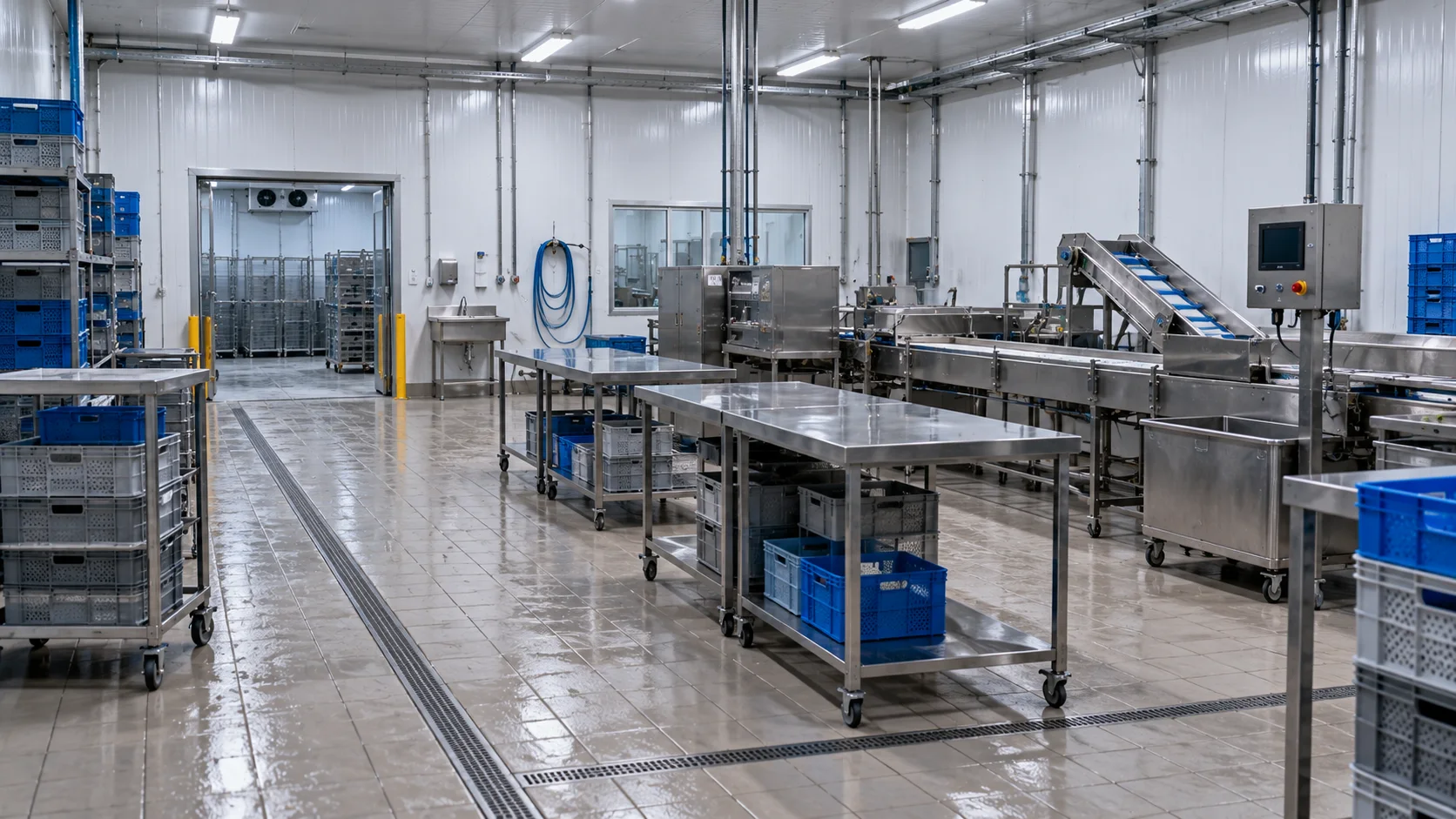
Short answer: a traceability system has to answer two questions in minutes. Backwards: which raw materials, from which suppliers and which batches, went into this product? Forwards: which customers received each raw material batch? If answering them means gathering paper and spreadsheets for hours, traceability exists on paper but not in practice.
What to record at each stage
Traceability is built link by link. If one is missing, the chain breaks. These are the minimum data at each point:
- Receiving. Supplier, product, supplier batch, expiry date, quantity, and any intake checks performed (temperature, condition, paperwork).
- Storage. Where each batch is and how much is left, so what expires first is used first.
- Production. Production order, recipe, which raw material batches were consumed and in what quantity, who made it, and in-process quality checks.
- Packing and labelling. Finished product batch, production and expiry dates, with a label that identifies it.
- Dispatch. Which batches left, in what quantity, for which customer and on what date.
The test that matters: simulate a recall
The most honest way to assess traceability is to simulate a product recall. Pick a raw material batch at random and time how long it takes to find which products it ended up in and which customers received them. Then do the reverse with a finished product batch.
With spreadsheets and paper this usually takes hours or days and depends on nobody having forgotten to write something down. With a well-built system it takes minutes, and the answer is the same whoever runs it.
Why spreadsheets fall short
- Data is written two or three times (paper on the floor, a spreadsheet in the office, the invoicing system), and every copy can introduce an error.
- The link between input and output batches lives in someone's head or on a loose sheet.
- Stock by batch and expiry isn't visible in real time.
- When an audit or complaint arrives, the history has to be rebuilt by hand.
What the system needs on the plant floor
Traceability is won or lost at the moment the operator records something. So the system has to be designed for the floor: few screens, few fields, barcode or QR scanning instead of typing, integration with scales so weights aren't written by hand, and on-the-spot label printing. If recording takes longer than not recording, the data doesn't get entered.
It also has to integrate with what the company already uses, such as e-invoicing, so dispatch and invoice come from the same data.
Where to start
- Receiving and dispatch. They are the two ends of the chain and the first thing you'll be asked for in a complaint.
- Consumption in production. The link that connects input batches with output batches.
- Quality checks and reports. With the full chain in place, quality records and audit reports come out on their own.
Starting in parts means having something working within weeks and adding links without stopping production.
In short
- Traceability is useful if it answers backwards and forwards in minutes.
- Record the batch at receiving, consumption in production, the finished batch and dispatch.
- Recording on the floor must be fast: codes, scales and integrated labels.
- It can be digitised in stages, starting with receiving and dispatch.
We build traceability and production control systems for the food industry. See our services or write to contact@vortwood.com.